
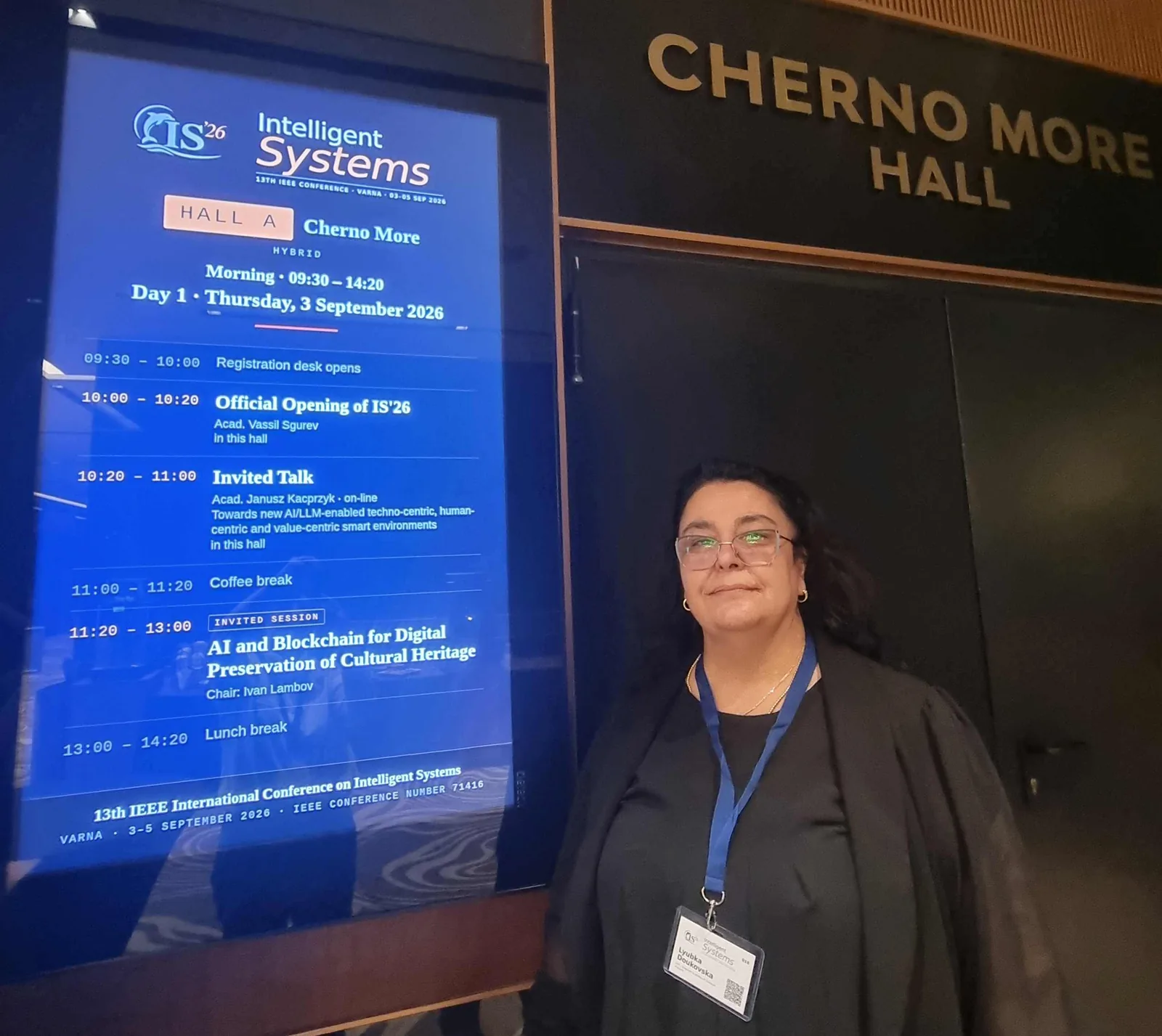






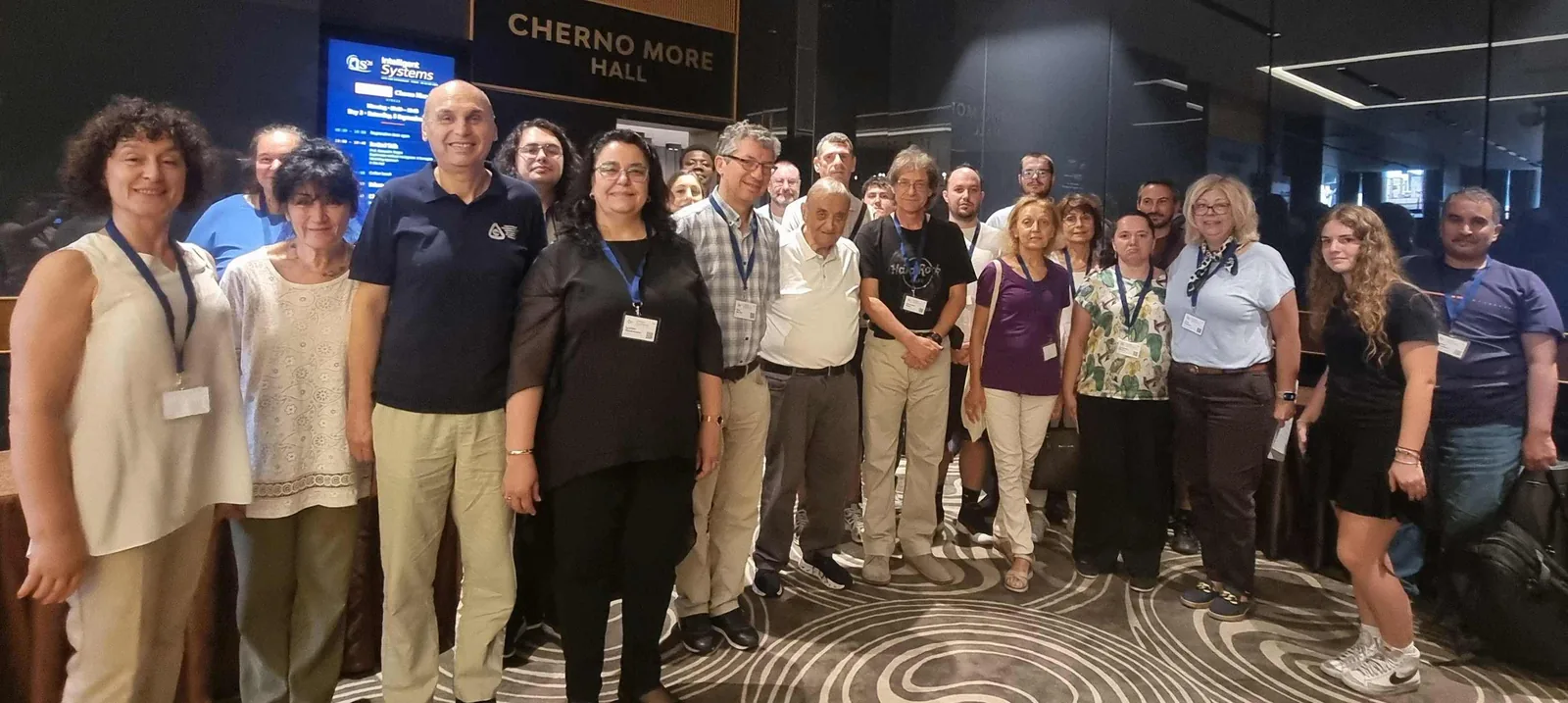

13th Edition IEEE Number 71416 Hybrid Conference

The 13th IEEE International Conference on Intelligent Systems

Dates 03–05 Sep 2026
Location Varna, BulgariaHotel Cherno More
Submission Deadline 08 Jun 2026
Proceedings IEEE XploreAfter acceptance

News

Twenty-four years of scientific tradition, continued in Varna.

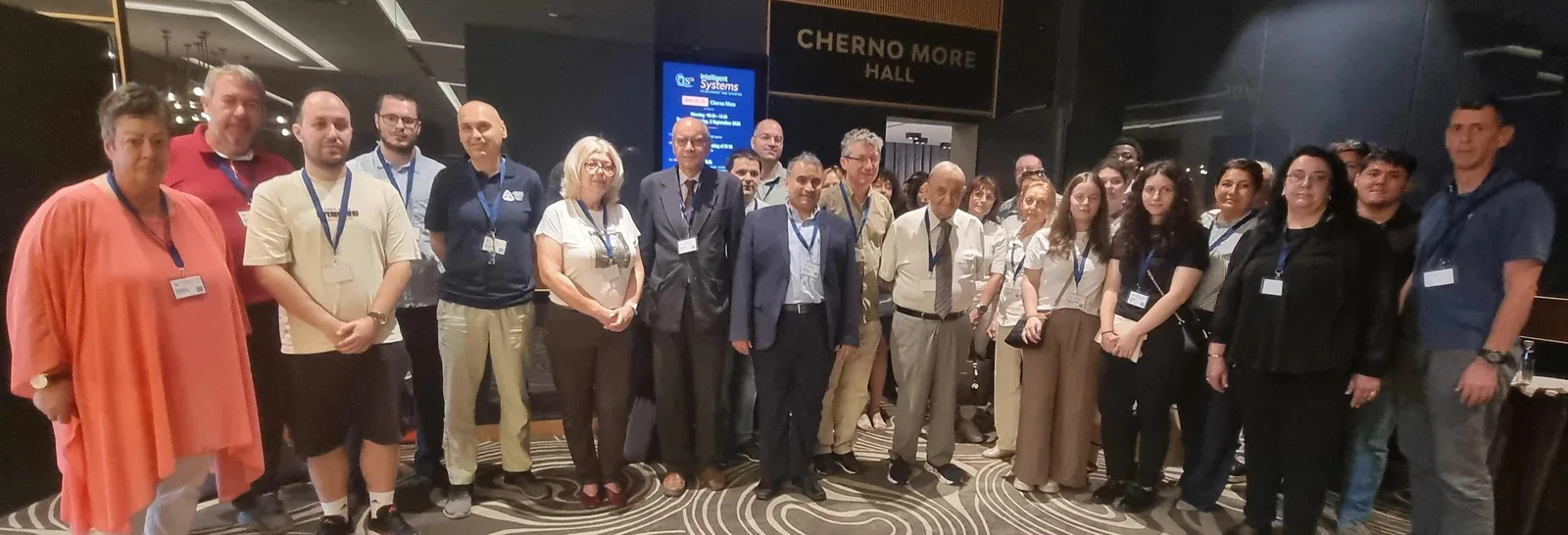
The 2026 13th IEEE International Conference on Intelligent Systems is a forum gathering top specialists in the broad area of intelligent systems — from data science and machine learning to computational intelligence, explainable AI, and applications across industry, science, and society.

The IEEE IM/CS/SMC Joint Chapter of Bulgaria, the IEEE CIS Chapter – Bulgaria, and the Bulgarian Association of Intelligent Systems are financial and technical sponsors of IS'26. The Institute of Information and Communication Technologies (IICT-BAS) and the John Atanasoff Society of Automatics and Informatics (SAI) are among the organizers of this prestigious event.

Building upon the tradition of its previous editions (link to IS'24), the 2026 13th IEEE International Conference on Intelligent Systems (IS'26) will continue to bring together researchers and practitioners exploring and applying intelligent systems. This forum is an opportunity for scientists from all over the world to share ideas and achievements in the theory and practice of data science, intelligent control, artificial intelligence, neural networks, soft computing, data mining and knowledge discovery, machine learning, deep learning, intelligent education, and related fields.

Presentations should highlight contemporary intelligent systems as a concept that combines theoretical research and applications in automation and information technologies. All aspects of intelligent systems are of interest: theory, algorithms, tools, and applications.

In addition to the main sessions, the conference timetable will encompass several other workshops, poster sessions, tutorial courses, and student sessions, in similar scopes, which will take place before, during, and after the end of IEEE IS'26. Following the tradition, all submitted original papers to IS'26 shall be carefully reviewed for possible inclusion in the Conference Proceedings. After the Conference, a selected number of the best papers shall be expanded and revised for possible inclusion in refereed journals or Springer books.

A lineage across two decades
  • IS'02Varna
  • IS'04Varna
  • IS'06London
  • IS'08Varna
  • IS'10London
  • IS'12Sofia
  • IS'14Warsaw
  • IS'16Sofia
  • IS'18Funchal
  • IS'20Varna
  • IS'22Warsaw
  • IS'24Varna
  • IS'26Varna

Main topics & application areas

The conference covers theoretical foundations of intelligent systems alongside applied domains where those foundations deliver impact. The list is indicative, not exhaustive — contributions in adjacent areas are welcomed.

Main Topics

  • Artificial Intelligence
  • Autonomous Systems
  • Bio-Inspired & Evolutionary Intelligence
  • Blockchain & Distributed Ledger Technologies
  • Brain-Inspired Computing
  • Computational Finance and Economy
  • Conversational AI
  • Cyber-Physical Systems
  • Data Science & Knowledge Discovery
  • Deep Learning
  • Explainable AI (XAI)
  • Fuzzy Sets and Systems
  • Generalized Nets
  • Human-Machine Interaction
  • Intelligent Agents
  • Intelligent Control & Measurement
  • Intelligent Cybersecurity
  • Intelligent Decision-Making Systems
  • Intelligent Education
  • Intelligent Environments
  • Intelligent Pattern & Signal Processing
  • Internet of Things
  • Machine Learning
  • Multi-Agent Systems
  • Neural Networks
  • Trustworthy & Ethical AI

Application Areas

  • Agricultural & Environmental Systems
  • Autonomous Vehicles & Robotics
  • Business & Financial Intelligence
  • Cybersecurity & Privacy
  • Digital Health & Bioengineering
  • Education & Intelligent Tutoring
  • Energy & Power Systems
  • Game-Based Learning & Simulation
  • Industrial & Manufacturing Systems
  • Intelligent Transportation Systems
  • Smart Cities & Urban Computing
  • Smart Home & Ambient Assisted Living
  • Telecommunication & Networked Systems

Invited Sessions

Invited sessions gather contributions around a focused theme, organised by an invited chair. Papers submitted to an invited session follow the same EasyChair workflow as general submissions, with the session name indicated at submission time, and pass through the same peer-review process.

Intelligent Agriculture Risk Modeling and Optimization

Assoc. Prof. E. Trichkova-Kashamova, PhD

This session explores the role of intelligent systems in agricultural risk modeling and optimization to support smart and sustainable decision-making. Methodologies, tools, and case studies are examined that demonstrate how data analytics, modeling, artificial intelligence, and other advanced technologies can inform more effective and sustainable decisions across sectors. The session covers smart decision-making for resource allocation, mitigation of environmental impacts, economic growth, and the achievement of the Sustainable Development Goals.

Artificial Intelligence Risk Management Optimization Modeling Sustainable Development Smart Decision-Making Data-Driven Decisions Environmental Management

AI, Games, and Gamification in Education

Prof. Julita Vassileva, PhD — University of Saskatchewan, Canada

Artificial intelligence is rapidly transforming educational environments, opening new opportunities to design adaptive, engaging, and personalized learning experiences. Games, gamification, and persuasive technologies represent a particularly promising frontier in this transformation, offering principled mechanisms to motivate students, sustain their attention, and cultivate deeper cognitive engagement. This special session brings together researchers and practitioners working at the intersection of intelligent systems, educational technology, and behavioral design to explore how AI can power the next generation of game-based and gamified learning environments. By leveraging AI's capacity to model learner behavior, adapt to individual needs, and deliver timely interventions, these systems hold the potential to make learning not only more effective but genuinely compelling.

A central challenge motivating this session is the growing phenomenon of cognitive offloading to AI — the tendency of students to delegate thinking, problem-solving, and reflection to AI tools rather than developing their own competencies. As large language models and AI assistants become ubiquitous in academic life, educators face an urgent need for pedagogical strategies and technological countermeasures that re-engage students as active, effortful learners. Games and gamification offer a powerful response: by embedding challenge, agency, narrative, and meaningful feedback into the learning process, they can rebuild intrinsic motivation, foster grit and perseverance, and scaffold the metacognitive skills — self-monitoring, planning, and reflection — that AI tools tend to bypass. This session invites work that critically examines, designs, and evaluates such systems, with an eye toward responsible, human-centered AI in education.

AI-driven adaptive game-based learning systems that personalize challenge and content to individual learner models Gamification frameworks for promoting grit, persistence, and a growth mindset in AI-augmented educational settings Persuasive technology design to counteract passive AI reliance and encourage effortful, self-regulated learning Intelligent tutoring systems enhanced with game mechanics for scaffolding metacognitive skills (planning, monitoring, reflection) Detection and intervention strategies for cognitive offloading behaviors using learning analytics and behavioral modelling Narrative and role-playing game environments powered by LLMs for immersive, inquiry-based learning Ethical considerations in deploying persuasive and gamified AI systems with learners, including fairness, transparency, and autonomy Empirical studies on the effectiveness of gamified AI tools for student engagement, motivation, and learning outcomes Multi-agent and social game environments that foster collaboration, peer learning, and collective problem-solving Design frameworks for integrating AI, gamification, and formative assessment to support deeper cognitive and creative skill development

AI and Blockchain for Digital Preservation of Cultural Heritage

Dr. Ivan Lambov, IMI-BAS · Dr. Milena Dobreva, Strathclyde University, UK · Dr. Angel Marchev, UNWE

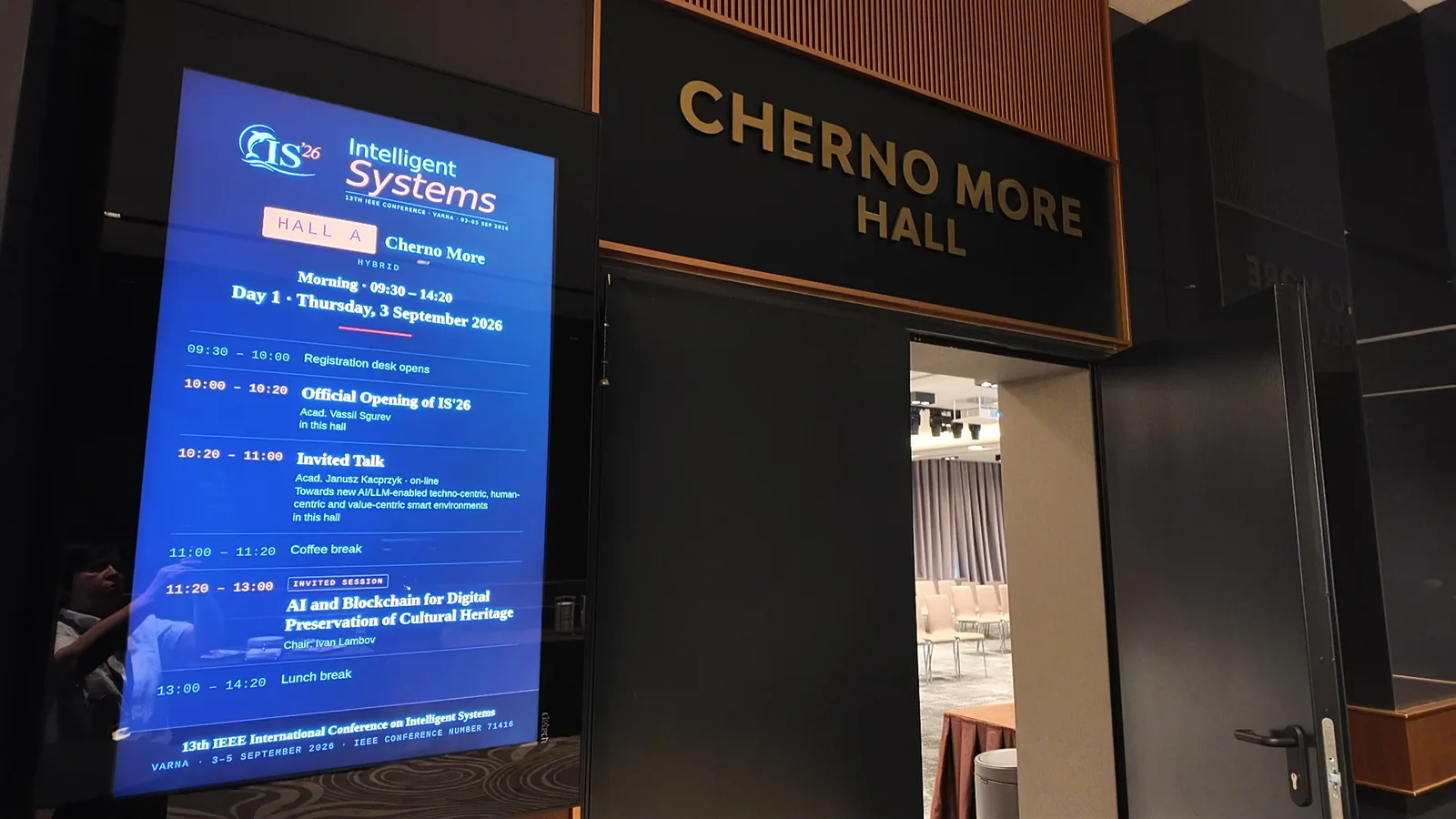
The invited session "AI and Blockchain for Digital Preservation of Cultural Heritage" explores emerging interdisciplinary approaches for safeguarding, documenting, and promoting cultural heritage in the digital era. The session focuses on the integration of artificial intelligence techniques, including machine learning, computer vision, and generative AI, with blockchain technologies that ensure authenticity, traceability, and secure ownership of cultural assets and archival data. Contributions are expected to address applications in museums, digital archives, smart tourism, virtual reconstruction, multilingual heritage preservation, and decentralized cultural data management. Particular attention will be given to ethical, legal, and societal challenges related to trust, accessibility, sustainability, and long-term preservation of digital cultural resources. By bringing together researchers, practitioners, and policymakers, the session aims to foster innovative collaborations and advance intelligent, transparent, and resilient solutions for preserving cultural heritage for future generations.

Artificial Intelligence Machine Learning Computer Vision Generative AI Blockchain Digital Preservation Cultural Heritage Museums & Digital Archives Smart Tourism Virtual Reconstruction Multilingual Heritage Decentralized Cultural Data

Call for Invited Session Proposals

Researchers and practitioners are invited to propose new sessions on focused themes within the conference scope. A proposal includes the session title, organiser(s), a short abstract (≤ 200 words), and a list of keywords.

Proposals are accepted on a rolling basis until 31 May 2026 and are reviewed by the Program Committee. Approved sessions are published on this page and announced to the conference mailing list.

Proposals are sent to ieee-is@bas.bg.

Submission timeline

  • 08 June 2026
    Papers submission deadline
  • 20 July 2026
    Notification of acceptance
  • 03 August 2026
    Early registration closes
  • 06 August 2026
    Submission of final papers
  • 03–05 September 2026
    Conference in Varna
Plan ahead

Submission through EasyChair.

Prospective authors are invited to submit original papers via EasyChair, following the instructions for authors on the conference website. Each paper will be reviewed for originality, relevance, technical quality, and clarity.

Full submission details →

Fees and Registration

Category Early
before 03 Aug 2026
Late
after 03 Aug 2026
IEEE Members € 400 € 450
Non-IEEE Members € 450 € 500
Students € 300 € 350

The final manuscript must be accompanied by a registration form and a full registration fee payment proof. Accepted papers presented at the conference will be submitted for inclusion in the IEEE Xplore Digital Library.

Download Registration Form PDF Download Registration Form DOCX

Registration policy

The conference format requires a page limit of up to 8 pages. An additional fee of EUR 50 is due for each excessive page.

For each accepted paper, one full author registration is required. Please do not forget to send us the filled-in registration form.

Each accepted paper must be presented either on-line or in person at the conference to be published in the conference proceedings. If a paper is not presented at the conference, it will not be included in the conference proceedings.

For student registration, a letter on headed note-paper from the applicant's University, signed by the Head of Department/School and confirming full-time studentship status, is required. Please email the document together with the registration form.

Registration fees will be collected by bank transfer only.

Payment information

An invoice is issued in the name of the university, organisation or individual through whose bank account the payment was made. It is not legally permissible to issue an invoice in the name of a university or organisation if the payment was made by an individual from their personal account.

Regardless of whether an invoice is explicitly requested, the organising committee is legally required to issue an invoice for each payment received.

Invoice checklist — for all approved papers

Please send the following information to ieee-is@bas.bg:

  1. Due registration fee for your participation in the conference.
  2. Paper ID and title.
  3. Recipient of the invoice — name of the university, organisation or individual who paid the fee.
  4. City, country.
  5. Address of the university, organisation or individual who paid the fee.
  6. VAT number of the university or organisation that paid the fee.
  7. Uniform Identification Code — if the university or organisation has such a code.
  8. Financially responsible person from the university or organisation that paid the fee.
  9. E-mail address to which the invoice should be sent once issued.

The university, organisation or individual paying the conference participation fee must indicate on the payment order the name of the participant and the ID and title of the paper.

Bank details

EUR
Bank
First Investment Bank
BIC
FINVBGSF
IBAN
BG53FINV91501217899647
Account holder / Beneficiary
Bulgarian Association of Intelligent Systems
Address
Akad. G. Bonchev Str., Bl. 2, Apt. 513, Sofia 1113, Bulgaria
Reason for payment
IEEE IS'26 — participant name and paper ID

Please note that all bank charges are on the account of the ordering customer.

Technical Program Committee

Honorary Chairs

R. Yager (US)
V. Sgurev (BG)
J. Kacprzyk (PL)

Conference Chairs

V. Piuri (IT)
L. Doukovska (BG)
V. Jotsov (BG)

Program Chairs

M. Hadjiski (BG)
K. Atanassov (BG)
A. Sachenko (US, UA)
N. Nikolov (BG)

Committee Members

M. A. Ahmad MY
B. Aloitabi SA
M. Bianchini IT
B. Bontchev BG
I. Bukovsky CZ
H. Bustince ES
F. Čapkovic SK
O. Castillo MX
P. Chountas UK
P. Coscia IT
W. Dai US
G. Dimirovski MK
A. Dourado PT
A. Gegov UK
P. Georgieva PT
R. Goncalves PT
S. S. Guru US
P. Hajek CZ
F. Herrera ES
S. Ilchev BG
M. Ivanova BG
T. Ivanova BG
K. Ito JP
R. Jafari UK
L. Jain UK
I. Jordanov UK
S. Kale US
N. Kasabov NZ
M. Kaufmann CH
N. Kerimbayev KZ
L. Koczy HU
A. Kordon US
M. Krawczak PL
V. Kreinovich US
R. Kruse DE
N. Kussul UA
R. D. Labati IT
K. Leiviska FI
M. Mansurova KZ
K. Masashi JP
P. Melo-Pinto PT
L. Michailova UK
A. de Miguel ES
V. Mladenov BG
J. Montero ES
N. Nikolova AU
E. Oja FI
L. Oneto IT
G. Papadopoulos CY
W. Pedrycz CA
R. Peleschak UA
K. Penev UK
G. Piandosi IT
I. Popchev BG
R.-E. Precup RO
I. Radeva BG
A. Razaque US
B. Rusyn UA
M. Saari FI
A. Sala ES
D. Sanders UK
I. Sarker AU
F. Schneider DE
R. Shadiev CN
A. Shankar UK
A. Shannon AU
S. Shahbazova AZ
T. Soffer IL
J. Suykens BE
E. Szmidt PL
N. Md Tahir MY
V. Terzieva BG
M. Thuillard CH
A. Topalov BG
M. Tulenbayev KZ
E. Tulunay TR
G. Ulutagay TR
G. Vachkov BG
B. Vachova BG
P. Vidnerova CZ
A. Villa CH
D. Wildermuth DE
T. Yildirim TR
H. Zhu CA
K. Wassilew DE

Organizing Committee

Chairs

I. Radeva (BG)
K. Boshnakov (BG)

Financial Chair

S. Veleva (BG)

Members

E. Djambazova, V. Terzieva, K. Wassilew

Submission of papers

Prospective authors of papers are invited to submit their papers via EasyChair, following the instructions for authors on the conference website.

Each paper will be reviewed for originality, relevance to the conference scope, quality of technical content, structure, language, and writing style. The final manuscript must be accompanied by a registration form and a full registration fee payment proof.

Accepted papers presented at the conference will be submitted for inclusion in the IEEE Xplore Digital Library. After the conference, a selected number of the best papers shall be expanded and revised for possible inclusion in refereed journals or Springer books.

Download Call for Papers PDF Submit on EasyChair View deadlines

Copyright conditions

Material submitted for presentation at IEEE IS'26 must be original, not published, and not being considered for publication elsewhere.

All accepted papers shall appear in the Conference Proceedings on IEEE Xplore. IEEE holds the copyright of material presented at the conference. Authors shall be informed in due time about the Copyright Transfer Form.

Correspondence ieee-is@bas.bg
Accepted papers will be submitted for inclusion in
Indexed by Scopus
IEEE Xplore Digital Library
Clarivate Web of Science

Scopus and Web of Science indexing are subject to post-conference editorial review by the respective indexing services; IEEE Xplore inclusion follows standard IEEE conference-publication procedure after presentation.

Submission Guidelines

Authors are invited to submit original, unpublished research papers that are not under review elsewhere. All submissions will be peer-reviewed and must follow the IEEE conference format.

Page limit
Maximum 8 pages, including figures, tables, and references.
Language
English.
Format
IEEE two-column conference template.
Templates
IEEE manuscript templates (MS Word / LaTeX) — ieee.org/conferences/publishing/templates.html
Submission platform
EasyChair — https://easychair.org/conferences/?conf=is26
Submission format
PDF only.
Review type
Double-blind.

Each submission will be evaluated for originality, technical soundness, clarity, and relevance to the conference topics. Accepted papers will require at least one author to register and present the paper.

Copyright Forms

Content to be added

Instructions for the submission of the camera-ready papers

Content to be added

Creating and using your PDF eXpress Account

Content to be added

Presentations

Content to be added

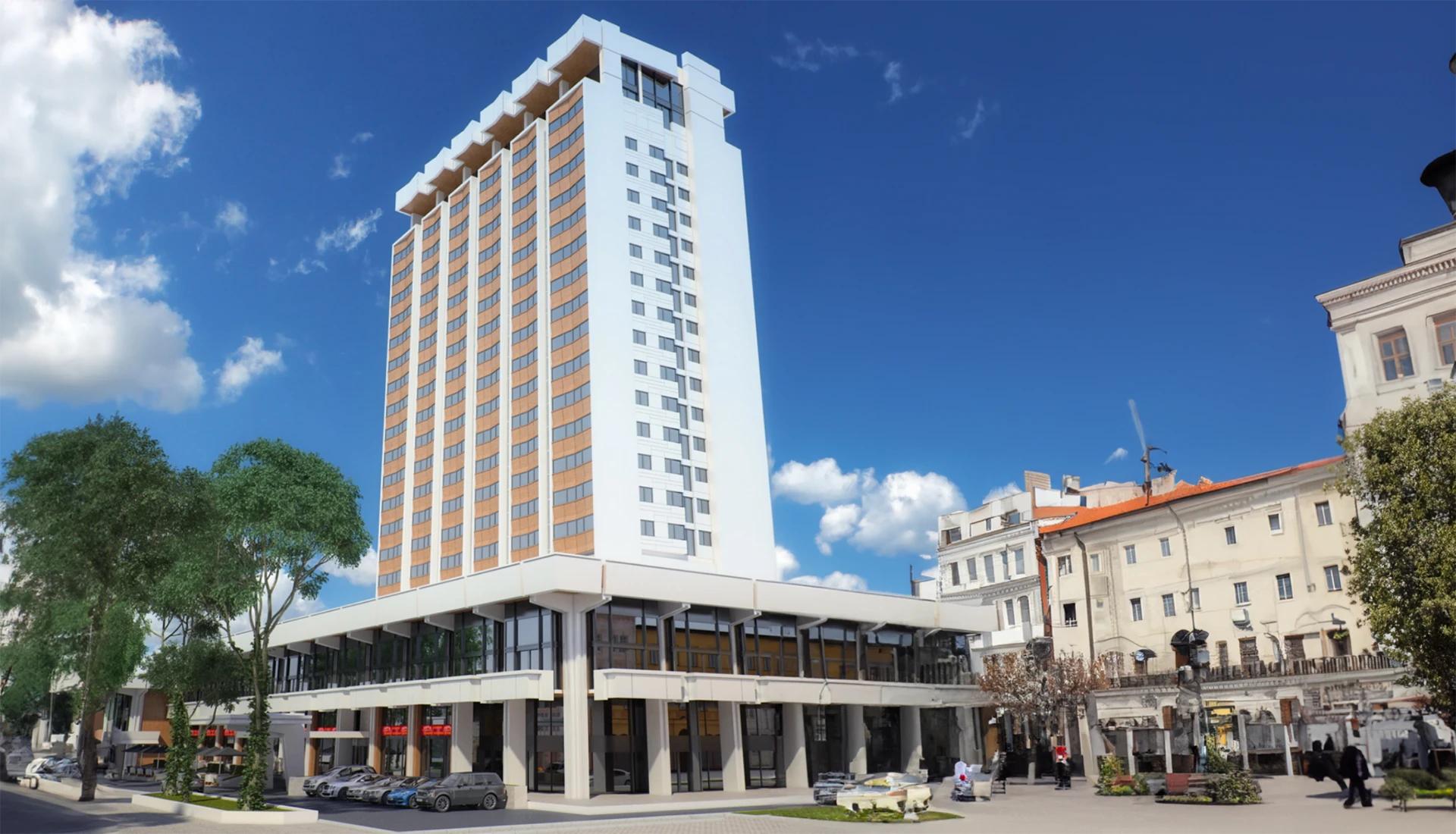
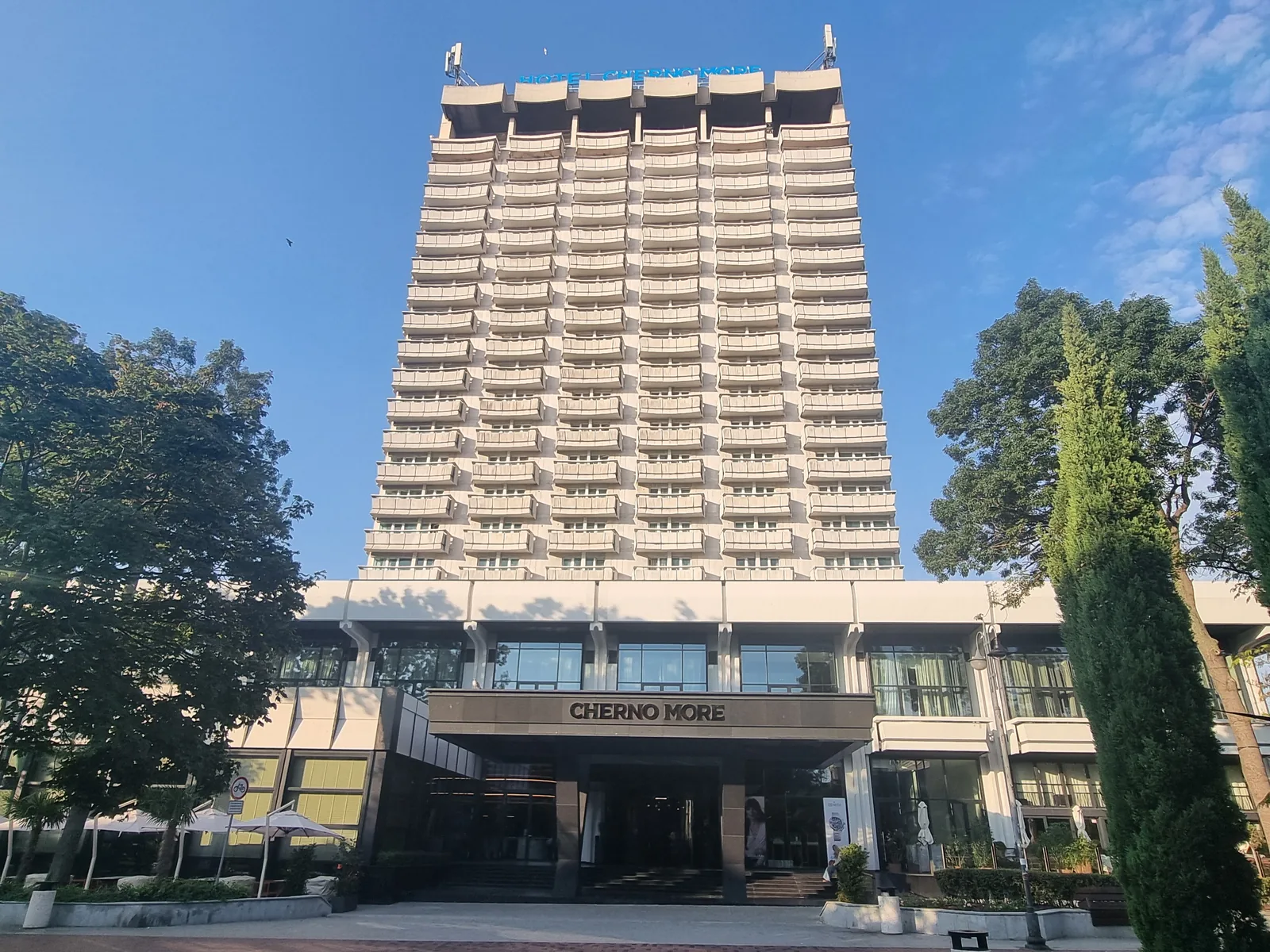
Hotel Cherno More — the IEEE IS'26 conference venue, Varna
Hotel Cherno More · conference venue

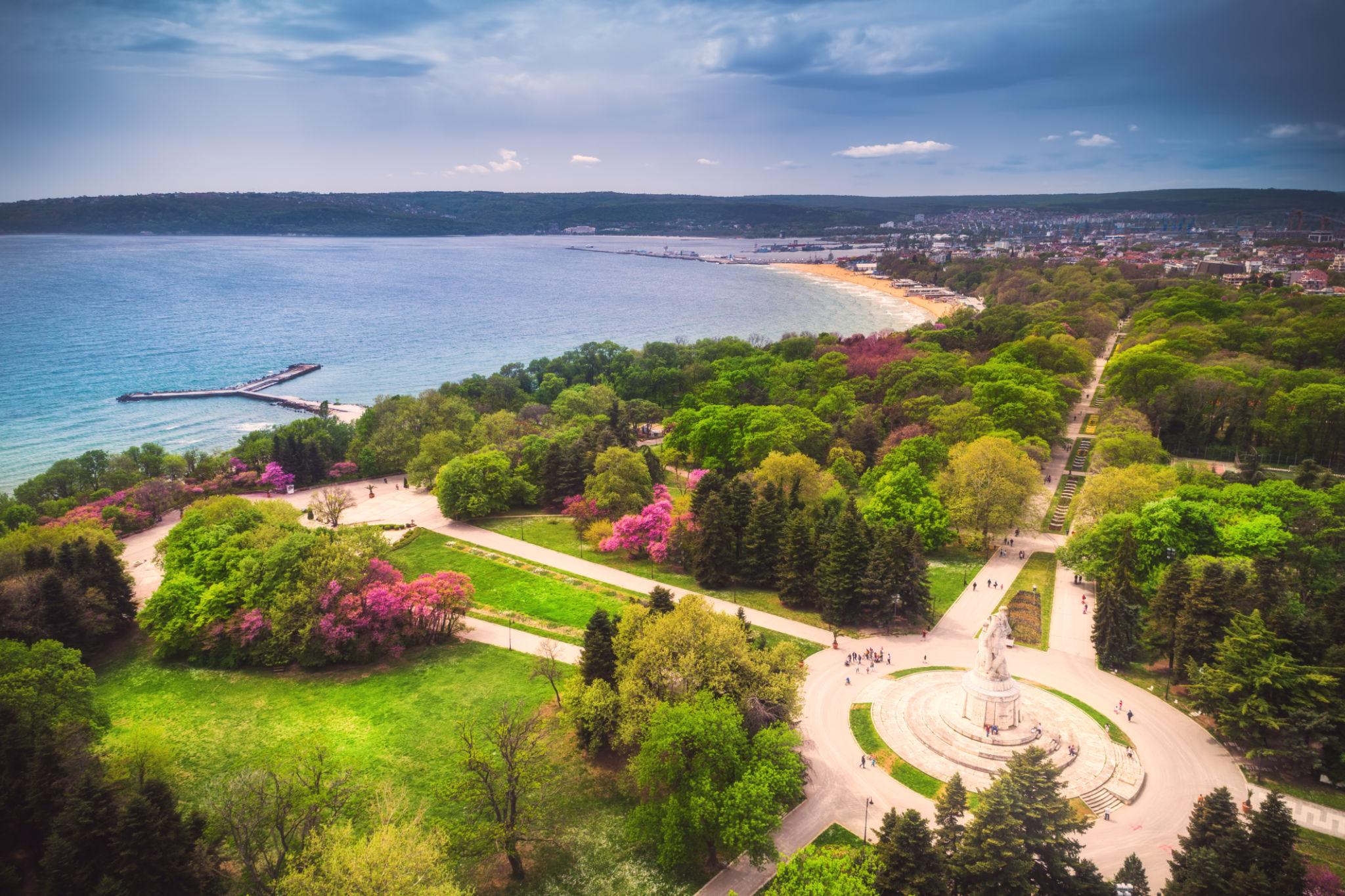
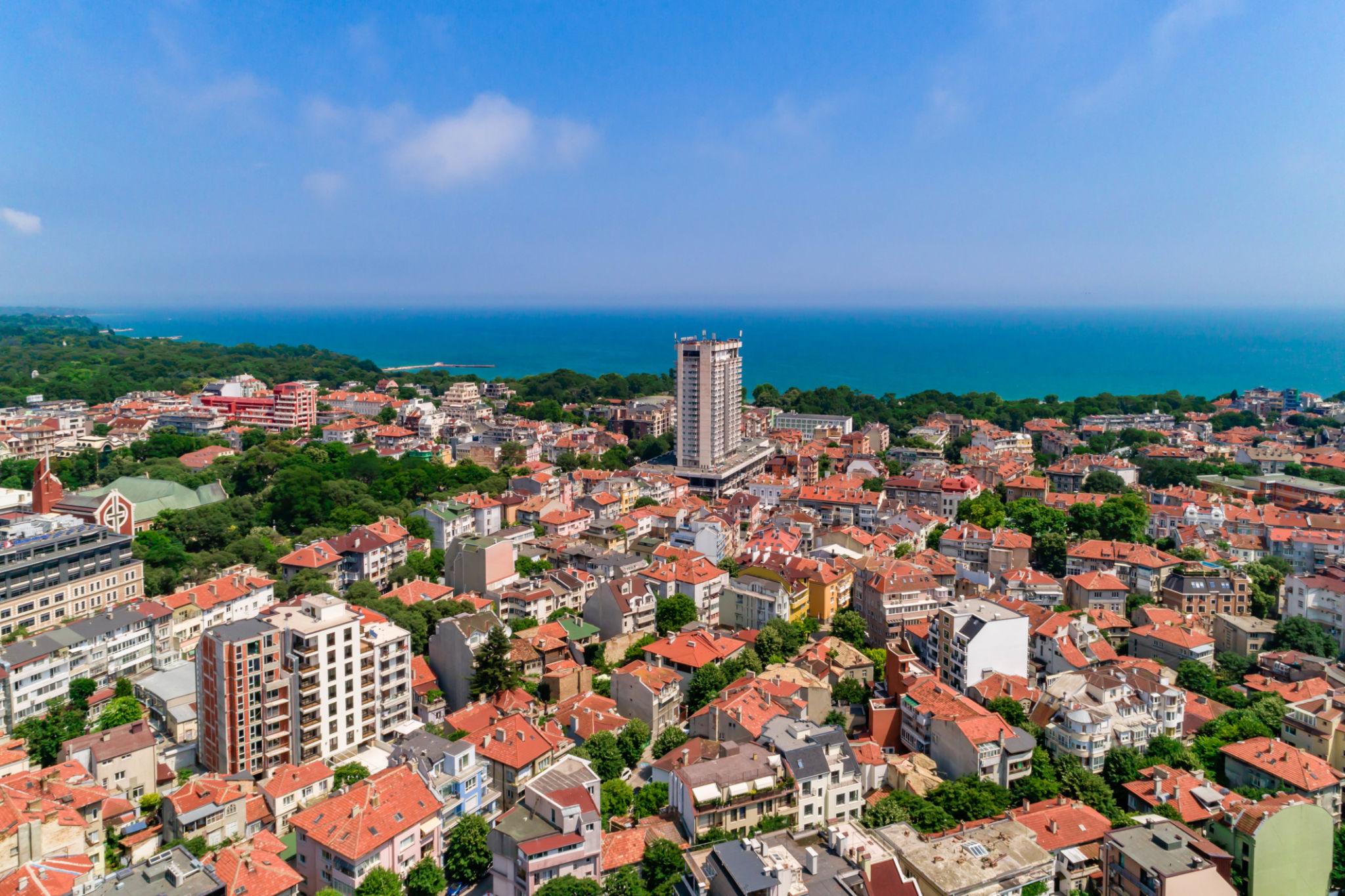
Varna, Bulgaria — by the Black Sea

The conference venue is Hotel Cherno More, located near the sea park, the beach, and a zone of beautiful natural parks along the coastline.

There are plenty of possibilities to make a direct connection from the conference venue to the resorts of St. St. Constantine and Helena and Golden Sands. The venue is around 10 km from Varna International Airport, with a direct bus 409 connection that runs on a city route to the airport, railway, and bus station with regular transport.

Different car service facilities are available at the hotel. You are welcome to write to the organizing committee for assistance with local transportation or planning your personal schedule during the conference.

Hotel Cherno More

Boulevard Slivnitsa 33, Varna

Distance ~10 km from airport
Transport Direct bus 409
Nearby Sea park, beach, Golden Sands resort
Format In-person & remote (hybrid)
Interactive map

The Google Maps embed loads after you accept the privacy banner. Until then, use the View on Google Maps link below to open the venue location.

Hotel Cherno More · bul. Slivnitsa 33, Varna View on Google Maps →

Photograph notice. The images of Varna and Hotel Cherno More shown on this page are provided solely for illustrative purposes within the academic context of the IEEE IS'26 conference. All image rights remain with their respective copyright holders. If you are the rights holder of any photograph displayed here and wish to request attribution, modification, or removal, please contact ieee-is@bas.bg and the organising committee will act promptly.

Organized & sponsored by